
Keynote Lecture
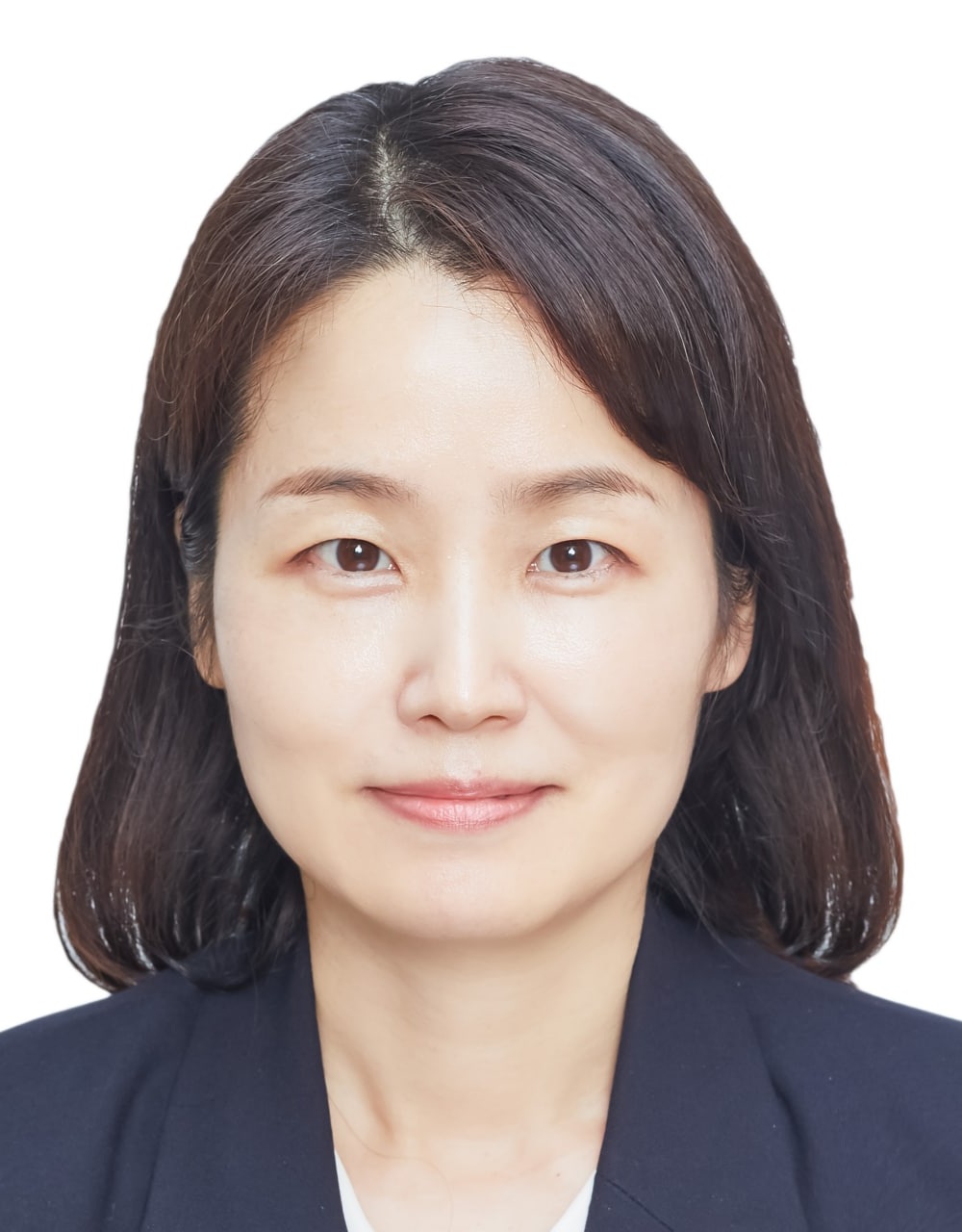
- Noh, Yoojeong
- Professor
School of Mechanical Engineering, Pusan National University - Profile > Abstract >
Education
| 2004 ~ 2009 | The University of Iowa, Mechanical Engineering, Ph. D |
| 2001 ~ 2003 | Korea Advanced Institute of Science and Technology, Korea, Mechanical Engineering, M.S |
| 1997 ~ 2001 | Pusan National University, Korea, Mechanical Engineering, B.S |
PROFESSIONAL EXPERIENCE
| 2015.03 ~ | Pusan National University, School of Mechanical Eng., Professor |
| 2011 ~ 2015 | Keimyung Univ., Department of Mechanical and Automotive Eng., Assistant Professor |
| 2010 ~ 2011 | Korea Institute of Machinery and Materials (KIMM), Senior Researcher |
| 2010 | Pusan National Univ., Post Doc |
DISSERTATION
| • “Input Model Uncertainty and Reliability-Based Design Optimization with Associated Confidence Level,” The University of Iowa, 2009. |
RESEARCH AREA
• Prognosis and Health Management
- Fault detection, diagnosis, and prognosis
• Data Analysis and Data Driven Design
- Data driven optimization and analysis
- Digital twin-based design
• Uncertainty Quantification
- Parametric & Nonparametric statistical modeling
- Multivariate statistical modeling with correlated variables
• Design under Uncertainties with Lack of Information
- Reliability analysis
- Reliability-Based Design Optimization (RBDO)
- Fault detection, diagnosis, and prognosis
• Data Analysis and Data Driven Design
- Data driven optimization and analysis
- Digital twin-based design
• Uncertainty Quantification
- Parametric & Nonparametric statistical modeling
- Multivariate statistical modeling with correlated variables
• Design under Uncertainties with Lack of Information
- Reliability analysis
- Reliability-Based Design Optimization (RBDO)
▲
Abstract
This presentation reflects on what it means to grow as an engineer, based on the speaker’s experience as a woman professor in mechanical engineering. It shares her academic and professional journey from undergraduate study to graduate school, doctoral training, and academic career. The talk discusses how women engineers build confidence, develop expertise, seek meaningful opportunities, and create sustainable career paths in a field where they are still underrepresented. It also highlights the importance of mentoring, institutional support, fair opportunities, work–life balance, and resilience in the growth of young engineers. The presentation aims to encourage young women scientists and engineering students to strengthen their professional identity, pursue opportunities with confidence, and build their own long-term paths in engineering.
▲
QNS Science Arcade

- Choi, Seokyong
- Public Ebgagement Management
IBS Center for Quantum Nanoscience - Profile >
Profile
▲
Abstract
Being a female professor alone in Korea is considered quite unique, meanwhile, being a female, Foreign AND Engineering Professor can be “super” minority. In the first part of this invited talk, I will introduce my path and personal experience in becoming a female engineer in Canada, then as a female and foreign professor in engineering school in both Japan and Korea. Amid various culture difference and academic background, I am currently enjoying the challenges and potential to grow more as a female professor in south Korea.
In the second part of this invited talk, I will also briefly introduce my current academic research interested in developing seawater-based electrocatalysts. Compared to conventional alkaline seawater hydrolysis and metal-air batteries, seawater-based electrochemical devices are promising large-scale energy storage devices and are highly compatible with offshore ocean locations or large-scale maritime applications. However, the complexity of the seawater components, in particular, chlorine anions (Cl-) blocks the metal surface and hinders the oxygen reduction reaction (ORR) and oxygen evolution reaction (OER). In particular, platinum or metal-based electrocatalysts often suffer a severe reduction of the catalytic activity due to the strong adsorption effect of the Cl- on the catalyst surface. As a result, the ORR/OER electrocatalyst /active sites must be prevented from Cl- adsorption during reactions. For instant, our group has designed a negative-charged surface of Nitrogen-doped graphene (NG) coated on cobalt/Iron electrocatalyst to repel Cl- selectively in seawater electrolyte. Our group employed plasma engineering to design and anchor transition metal based (Co, Fe) nanoparticles on a negative charge-mediated surface composed of nitrogen-doped graphene (NG). The strong negative-charged surface can successfully repel Cl-, therefore effectively protected the catalytic active sites from the seawater electrolyte.
In the second part of this invited talk, I will also briefly introduce my current academic research interested in developing seawater-based electrocatalysts. Compared to conventional alkaline seawater hydrolysis and metal-air batteries, seawater-based electrochemical devices are promising large-scale energy storage devices and are highly compatible with offshore ocean locations or large-scale maritime applications. However, the complexity of the seawater components, in particular, chlorine anions (Cl-) blocks the metal surface and hinders the oxygen reduction reaction (ORR) and oxygen evolution reaction (OER). In particular, platinum or metal-based electrocatalysts often suffer a severe reduction of the catalytic activity due to the strong adsorption effect of the Cl- on the catalyst surface. As a result, the ORR/OER electrocatalyst /active sites must be prevented from Cl- adsorption during reactions. For instant, our group has designed a negative-charged surface of Nitrogen-doped graphene (NG) coated on cobalt/Iron electrocatalyst to repel Cl- selectively in seawater electrolyte. Our group employed plasma engineering to design and anchor transition metal based (Co, Fe) nanoparticles on a negative charge-mediated surface composed of nitrogen-doped graphene (NG). The strong negative-charged surface can successfully repel Cl-, therefore effectively protected the catalytic active sites from the seawater electrolyte.
▲